Art in Interior Design: How to Hang It Proportionally
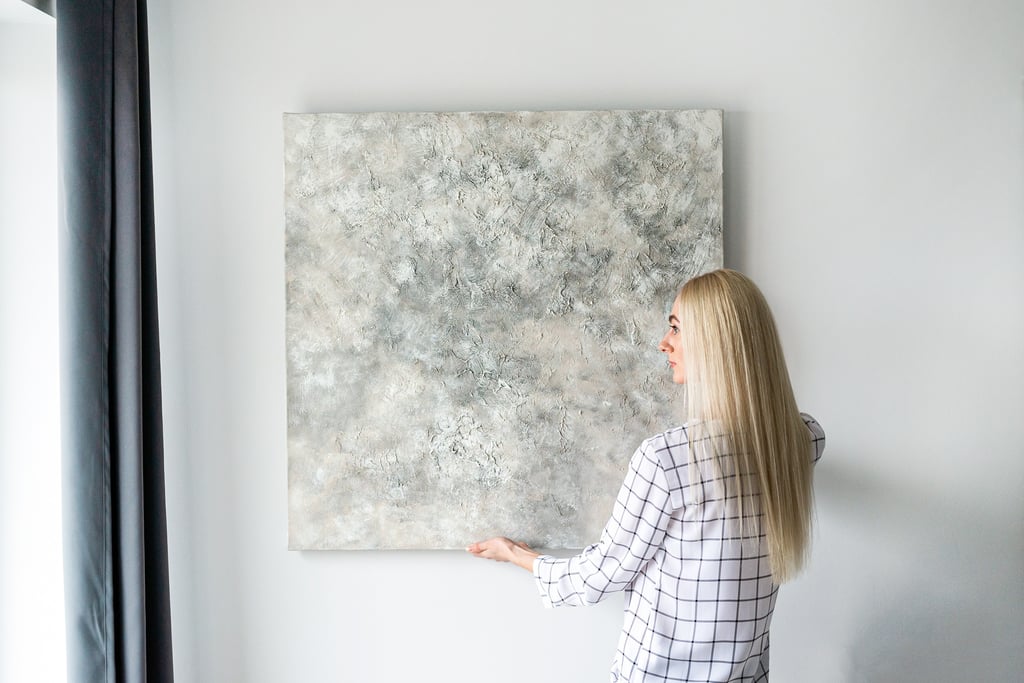
Once you have chosen a painting, its placement within the space becomes just as important. In this guide, you will find practical principles for positioning artwork correctly—both in terms of location and height
A painting should not only appeal to you visually, but also integrate harmoniously with its surroundings. Thoughtful placement helps create a balanced, refined interior while enhancing the presence of the artwork itself.
1. Proportion is essential
The size of the painting should be proportional to the wall on which it is placed. Consider the shape of the wall—whether it is horizontal, vertical, or square.
A rectangular painting works particularly well above a sofa, bed, or dining table.
A square format is more versatile and adapts easily to different spaces.
2. Artwork above furniture
When hanging a painting above a sofa, console, or other piece of furniture, follow the two-thirds rule. The artwork should occupy approximately 50–75% of the furniture’s width, and in some cases up to 90%.
The recommended distance between the bottom of the painting and the top of the furniture is 15–25 cm. This spacing ensures visual balance and prevents the composition from feeling disconnected.
3. The right height
The most comfortable viewing position is when the center of the painting is at eye level. This typically falls between 150–168 cm from the floor, depending on ceiling height and individual proportions.
When creating a gallery wall or a composition of multiple works, maintain a consistent central alignment. This creates a cohesive and harmonious overall impression.
4. Rules that can be reconsidered
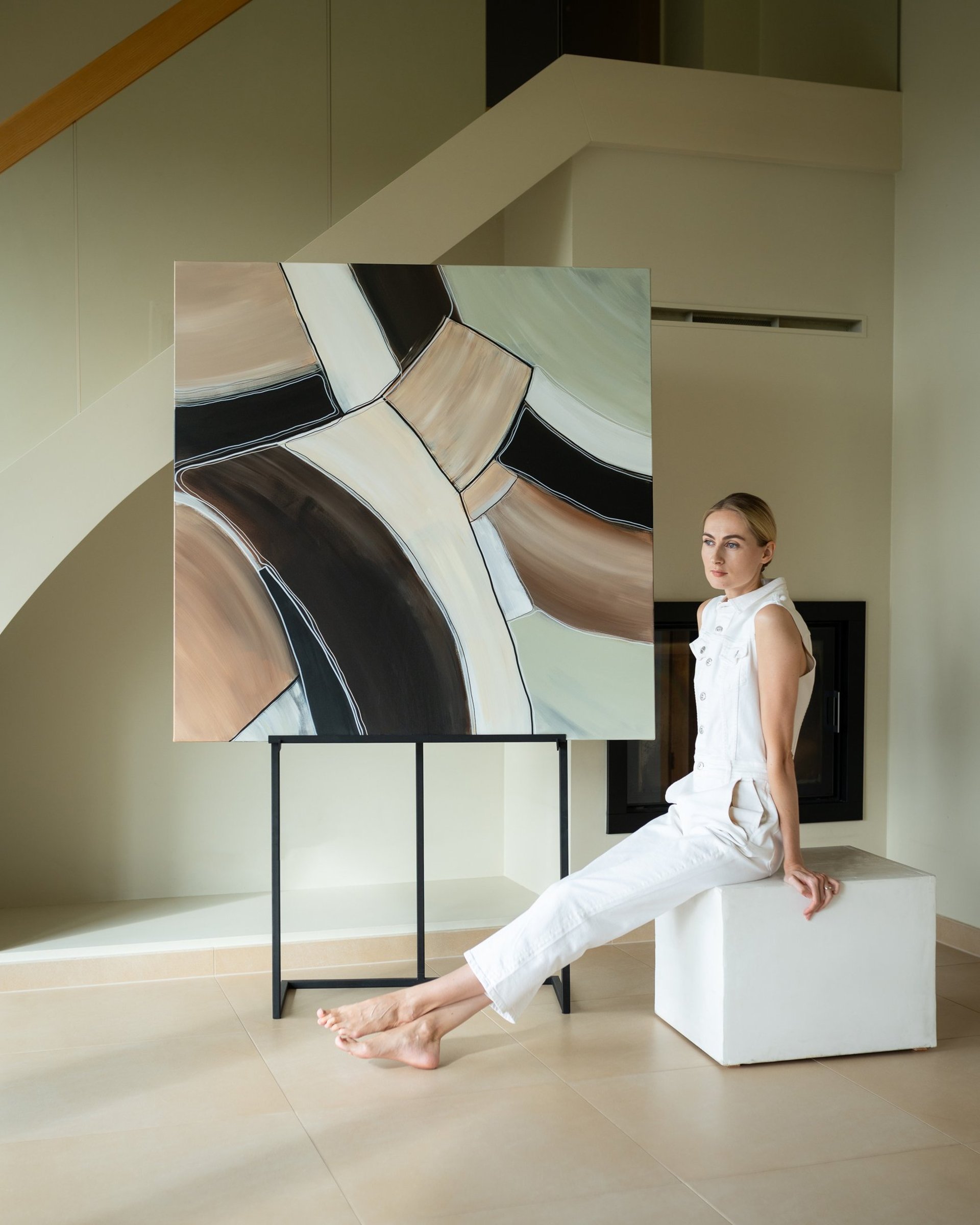
In contemporary interiors, artwork is not always hung on the wall. Paintings are often placed directly on the floor, leaned against walls, or positioned on consoles and shelves. This approach introduces a more relaxed, informal character and allows for greater flexibility in rearranging compositions.
Ultimately, perfect symmetry is not the goal. What matters most is that the artwork resonates with you, carries emotional value, and contributes meaningfully to the atmosphere of the space.